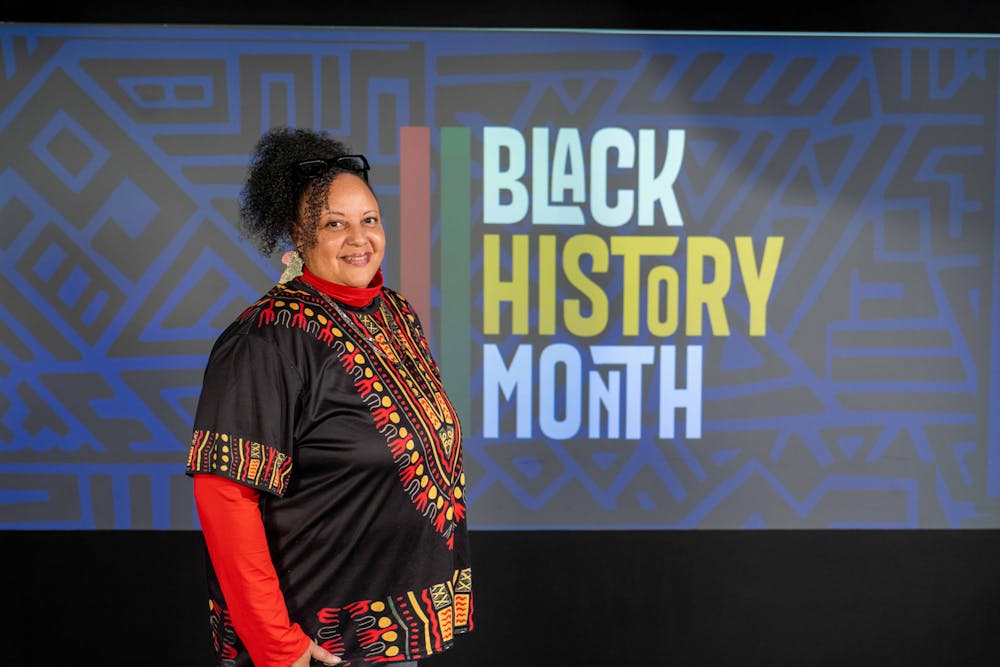
On Friday, February 13, the Student Life Media Team sat down with Lisia Aikens for a conversation rooted in history, community, and culture. SLMT's Senior Editor Courtney Joy Breeden interviewed Ms. Aikens, Administrative Assistant for the Center of Africana Studies, about the place of Black history in America, and the ways Kean University continues to cultivate Black-centered spaces where education, collaboration, and leadership thrive.
Q: What does Black history mean to you?
A: Black History represents truth, resilience, innovation, and legacy. It is not only a reflection of past struggles, but a celebration of contributions that continue to shape culture, education, leadership, and global progress. For me, it is a reminder of responsibility to honor those who came before us by educating, uplifting, and empowering future generations.
Q: What inspired you to work at Kean University's Center of Africana Studies?
A: I was inspired by the opportunity to create spaces where students feel seen, valued, and connected to history and culture. The center allows me to combine education, cultural engagement, and mentoring while helping students discover identity, purpose, and who they are in society.
Q: Looking back on your years at Kean University, particularly your work in Africana Studies, what have you learned from your time at Kean that has helped the campus community?
A: I have learned that education is the most powerful when it builds community. Creating inclusive programming and meaningful dialogue not only gives us a cultural-grounded experience but helps students and faculty have a better understanding with one another, and it helps strengthen the overall campus climate.
Q: There's this famous saying that "Black history is American history." How does Africana Studies shape students who are not a part of the Black Diaspora?
A: I would say that Africana Studies expands perspective. It teaches students critical thinking, empathy, and a deeper understanding of global interconnectedness. Students often leave with a stronger appreciation for diversity and a clearer understanding of how history influences present-day society.
Q: What transformations have you witnessed within students or anyone else you've mentored after deeply engaging with the Center of Africana Studies?
A: I would say I love the students. To me, the students are precious to me. As long as I was here, I would say that students often develop confidence in their voice and identity. I've seen them grow into leaders, becoming more culturally aware, academically motivated, and committed to service and advocacy within their communities.
Q: A big form of leadership on our campus is student involvement. With student organizations outside of Africana Studies, how has that department influenced their personal and professional development?
A: I would say working with diverse student organizations helps students build leadership, collaboration, and communication skills. They learn how to organize, advocate, and work across differences, and their experiences prepare them for professional environments as well as lifelong civic engagement.
Q: What is one fundamental principle you hope stays with students long after they leave Kean?
A: I hope that they carry the understanding that knowing who they are—their history, their values, and their purpose—is their source of strength. When students understand their identity, they move through the world with confidence, integrity, and commitment to uplifting others.
As Black History Month comes to a close, the Student Life Media Team is proud to spotlight Lisia Aikens, whose work reflects Kean University’s ongoing commitment to unity, representation, and cultural empowerment. Watch the full interview on our YouTube channel and walk down the Spirit Tunnel.