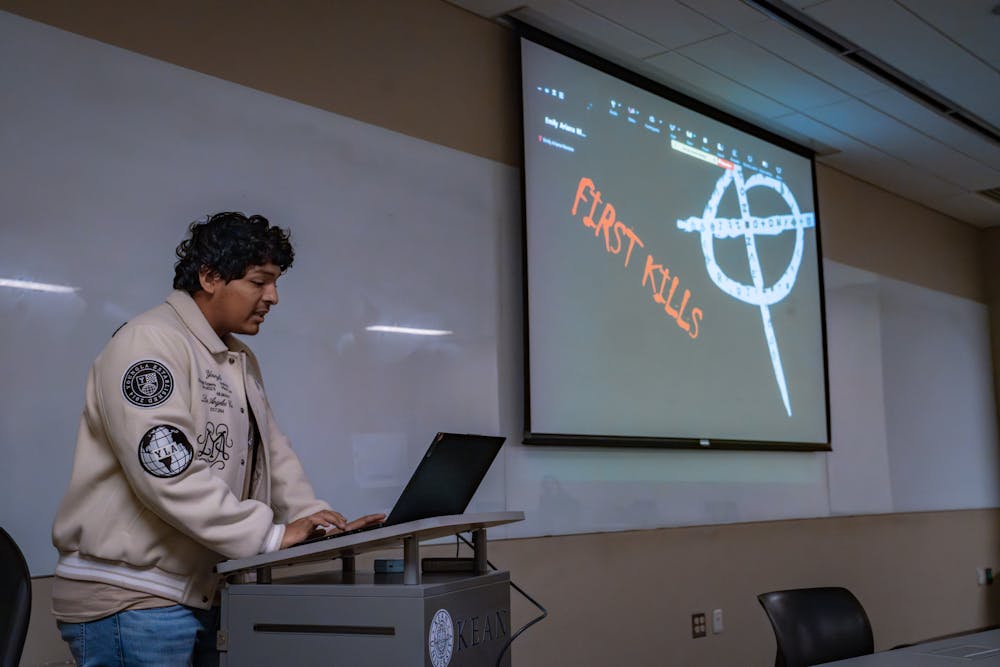
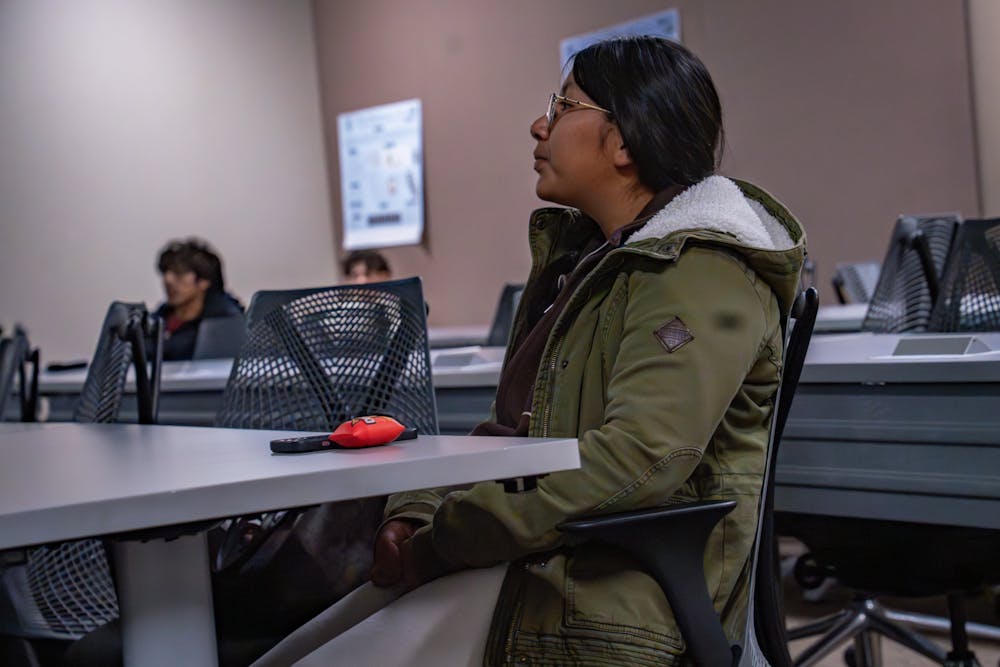
On Thursday, November 13, the Kean Criminal Justice Club hosted Unsolved Case Study: The Zodiac Killer in Green Lane Academic Building. The event focused on one of the most infamous serial killer cases that remains unsolved today.
Students gathered to discuss the details of the case and its significance in the modern day. Attendees learned about the various forensic tools such as identification devices, DNA profiling, and decryption tactics.
Ricardo Bazan, President of the Criminal Justice Club and a Senior majoring in Criminal Justice with a minor in Public Administration from Woodbridge Township, NJ, provided the details of the case—an unidentified 20th century American serial killer, dubbed “the Zodiac Killer.” Students were then able to ask questions and formulate theories on the mystery together.
“Knowing previous cases is [very] useful because you could see how they were solved, what was done,” Bazan explained after the event. “You take that, moving forward, to future cases that you can work on as an investigator.”
The Criminal Justice Club is a student-led organization at Kean with the aim of providing students with opportunities in criminal justice, expanding both their knowledge and their participation in the field. This event united students from different backgrounds on a topic of shared interest—solving the mystery of a notorious serial killer.
Brad Quito, a Freshman majoring in Criminal Justice from Elizabeth, NJ, attended the meeting due to his interest in criminal investigation.
“Hopefully, our next generation will be able to solve [these cases],” he remarked. Through the Criminal Justice Club, he explained, Quito hopes to learn more about the field and engage with students with similar passions.
Those pursuing criminal justice, quite a difficult field, naturally need all the help they can get. It is for that reason, as the executive board stressed, that students from a variety of majors are welcomed to the club. Not only can they contribute meaningfully to the club, but they also have plenty of value to take from it.
Jeremiah Renvill, Director of Public Relations and a Junior majoring in Criminal Justice with a concentration in Cybersecurity from Jersey City, NJ, clarified this stance.
“The Criminal Justice club is an opportunity to network,” he said. “Some people in here could be Criminal Justice majors, some people in here are Psychology majors [or] Forensics [majors]. So, for anybody, from any background, it’s a place of networking, a place of learning.”
The club hopes to continue hosting events like these and eventually expand to community outreach and professional networking. “I'm hoping to try and push more events, get more members interested and show the interesting stuff about criminal justice as a whole,” Bazan said. “We opened up a Discord to create more community opportunities for people to [chat], and then if they’re able to come to a meeting, they can come to a meeting.”
Future initiatives could include inviting a guest speaker from Homeland Security to share experiences with students, among other figures in the industry.
For now, events like Unsolved Case Study: The Zodiac Killer leave students with plenty to think about—both within and beyond the expansive field of criminal justice.