Forensic science is a multifaceted discipline that uses scientific methods and principles to investigate and uncover crimes, which can then be presented as evidence in court.
On Thursday, November 6, the Forensic Science Club hosted an Interactive Lab for Kean students. The event exposed students to the work of forensic scientists by replicating a lab investigation of illicit substances. In addition to hosting speakers, forums, and field trips, the club promotes mock case studies to help students immerse themselves in the field.
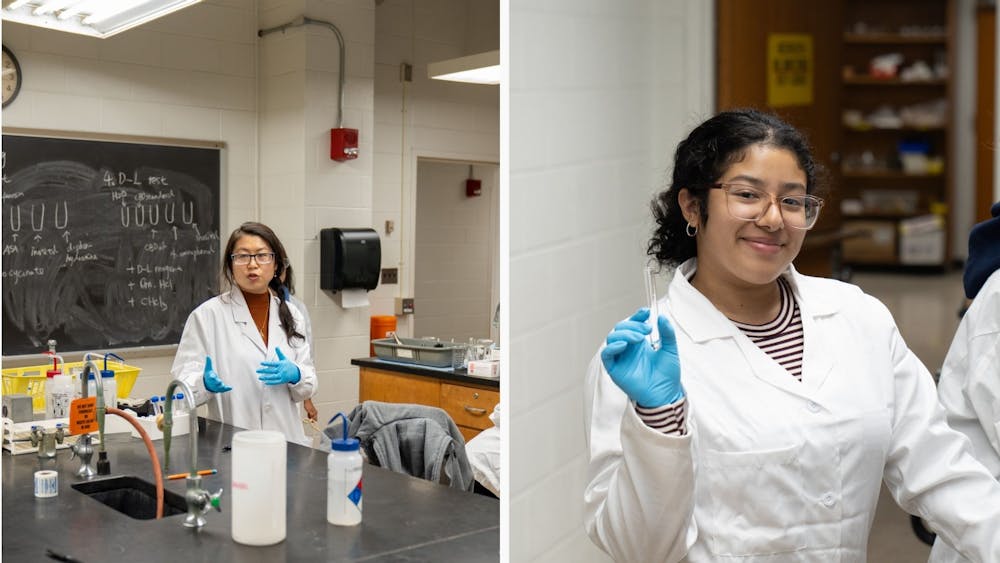
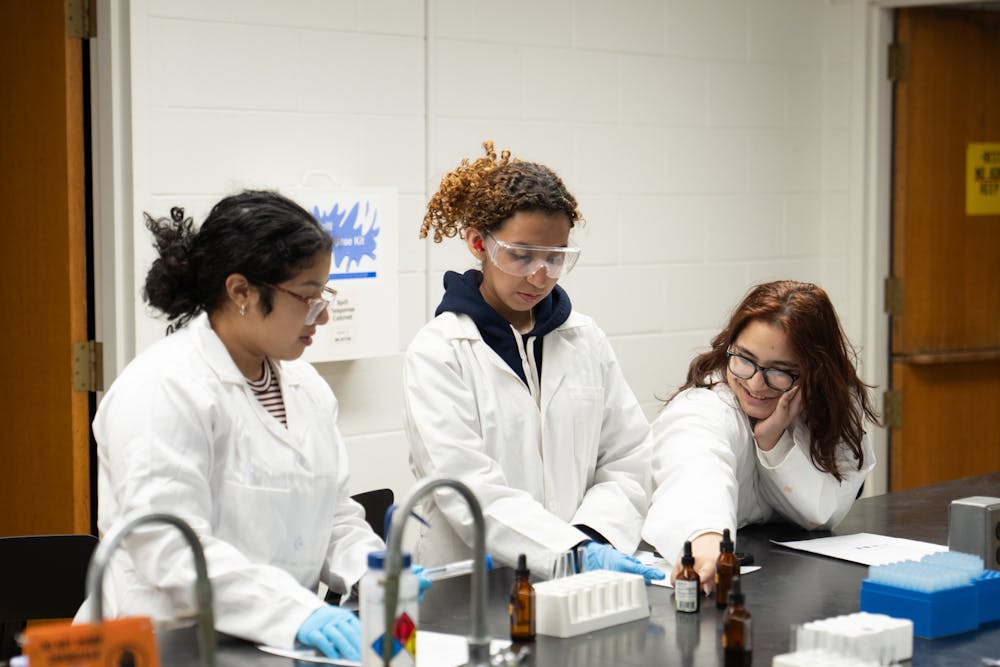
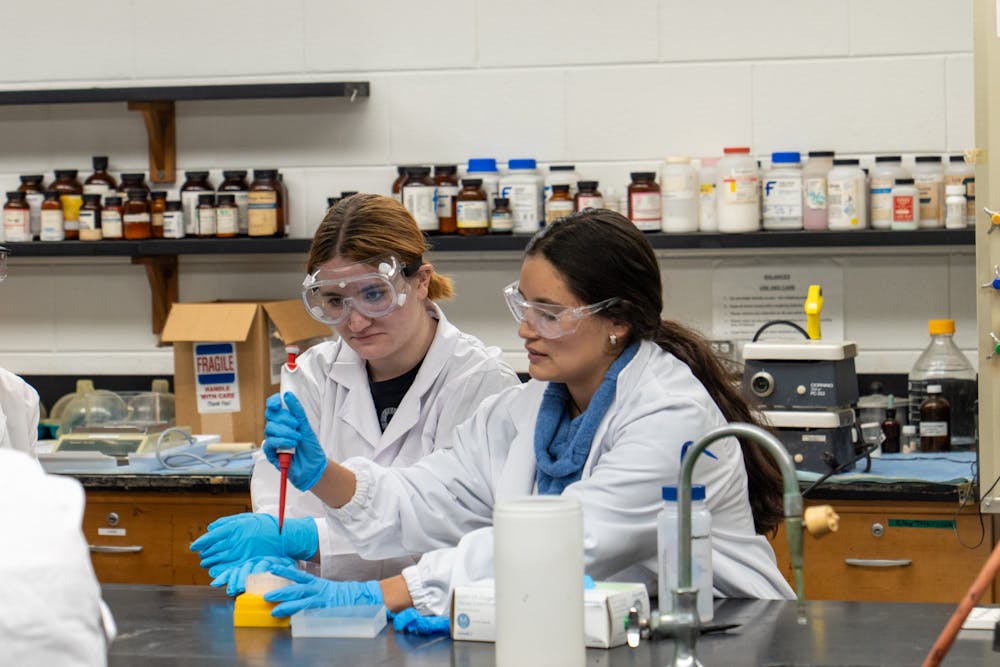
Deep within the Science Building, in a well-lit room lined with lab equipment, Assistant Professor Mingjing Sun of the Department of Chemistry demonstrated forensic techniques used to identify chemical evidence. A dozen students donning clear goggles and crisp white lab coats listened attentively as they examined the tools placed before them.
“About 80 percent of evidence analyzed [in forensics labs] is related to drug analysis,” Professor Sun explained. The field test conducted in the lab helped students learn how to identify the drug’s structure and name. “This is a very common presumptive test used in the field of drug analysis, because it’s very easy and simple, and very fast.”
The lab was open to students of all majors and levels of experience. “We have students from different backgrounds in this [Forensic Science] club,” Sun shared. “I know we have students from Music, maybe History, English—[students who] haven't taken any science class.” But the most important thing, she stressed, “is that the experiment [is] interesting, so that students can be attracted to the science part.”
Daphne Matute-Hernandez, a Sophomore majoring in Biology with a Forensic Science specialization from Flemington, NJ, shared her experience and reason for attending.
“I wanted to participate so that I could get a sense of what it is to work in a lab with many chemicals, to see if our work is well done,” she said. “I believe I have done many labs with natural ingredients like baking soda; however, I do think this was my first or second time using simulated chemicals, and it feels great to do it, and makes me feel empowered in a way.”
The club prepared simulated drugs to help students learn more about identifying illicit substances in real-world cases. After the professor’s instruction, attendees worked on four different tables crowded with delicate scientific instruments, conducting spot tests to safely identify drug samples.
Sun detailed the importance of practicing these labs for future, real-world applications. “Forensic scientists play an important role in terms of criminal investigations,” she explained. “They work in the lab, analyze the evidence, and then try to link the evidence to a specific suspect or to specific personnel.” In criminal cases, “they can help the judges [and] the jury figure out [if] a person is guilty... based on their analysis from the lab.”
With this simulated lab activity, students were able to witness forensic science and chemistry in action as well as sharpen their own skills in carrying out procedures.